22 November 2026
We Believe in the Resurrection of the Body. So Why Do We Treat Our Bodies as an Afterthought?
What Greek philosophy, the early Church and the resurrection reveal about God's concern for our physical wellbeing.
As Christians, we talk a lot about the soul.
We talk about spiritual growth, spiritual disciplines, spiritual maturity and spiritual health. We invest in Bible studies, prayer meetings, theological education and discipleship.
And rightly so.
But somewhere along the way, I wonder whether we've developed a rather incomplete understanding of what it means to be human.
Because we are not simply spiritual beings temporarily inhabiting inconvenient physical bodies.
We are embodied people. And God made us that way.
An interesting question emerges when we look more closely at the history of Christian thought;
Have we sometimes allowed ideas about the separation of body and soul to influence how we understand our faith, and consequently, how we care for ourselves?
Our bodies were never an afterthought.
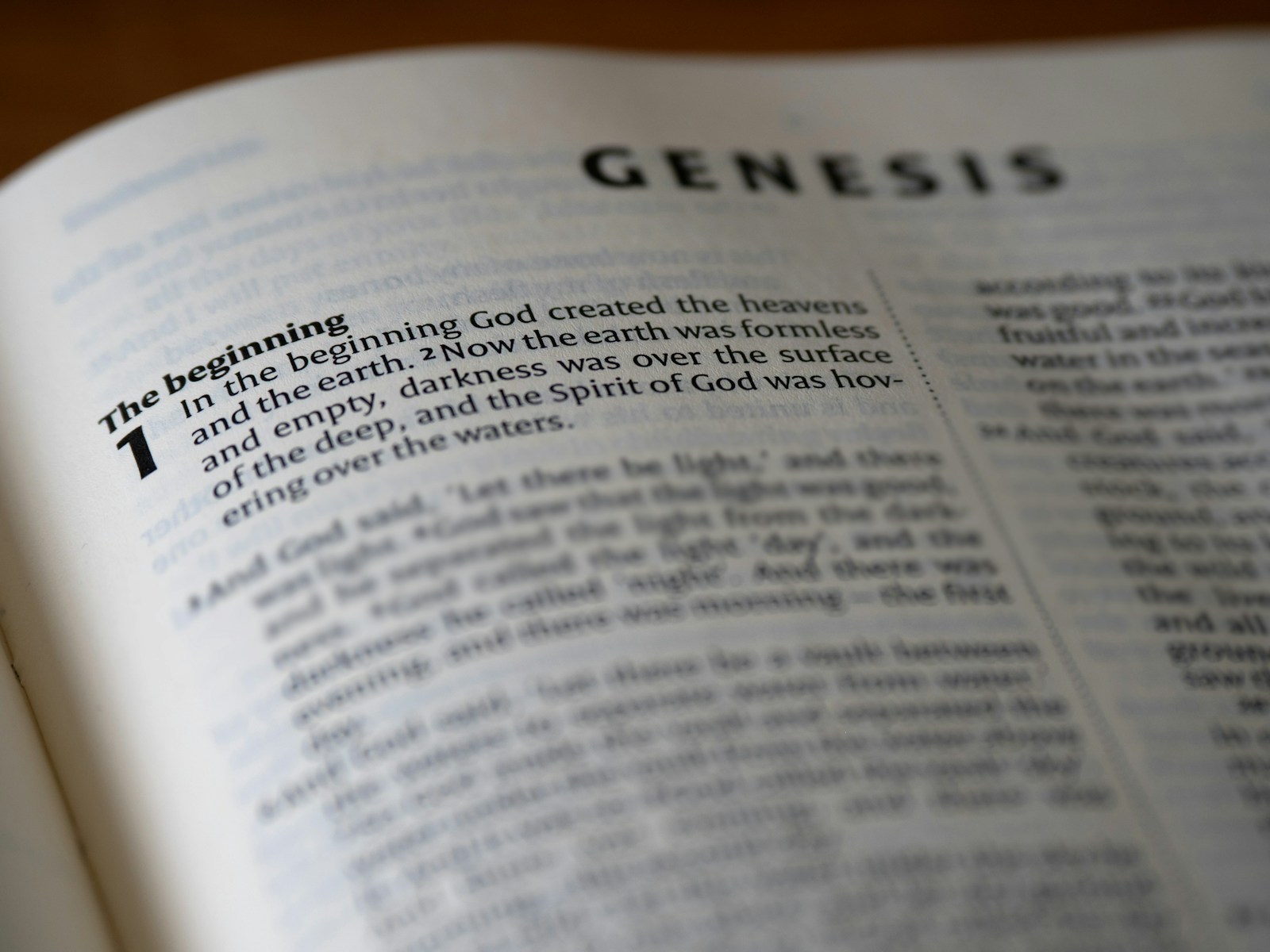
If we go back to Genesis, when God created humanity, He didn't create a soul and then reluctantly give it a body to carry around.
Genesis 2:7 describes God forming the man from the dust of the ground and breathing into him the breath of life. God's own breath.
The Hebrew word nephesh, often translated as 'soul' or 'living being', carries a rich meaning connected with life itself. In this passage, humanity becomes a living being.
The picture is not of a soul trapped inside a body, but of a whole, living person brought into existence by God.
And when God looked at His creation, He called it very good.
Our physical existence wasn't a design flaw. It was part of His good creation.
Yet I wonder how often we treat our bodies as though they're something to overcome rather than something to care for.
We push through exhaustion. We ignore hunger, fatigue and pain. We sacrifice sleep to meet another demand.
Sometimes we even regard these things as evidence of commitment or faithfulness.
But where did we get the idea that neglecting our physical needs makes us more spiritually devoted?
Did Greek philosophy influence how Christians think about the body?
This is where things become particularly interesting.
Centuries before Christianity emerged, Greek philosophers were debating the relationship between body and soul.
Plato, writing in the fourth century BC, distinguished between the physical world, which is changing and temporary, and a higher, unchanging reality.
In his dialogue Phaedo, the body is presented as something that can hinder the soul's pursuit of truth. The philosopher seeks wisdom by freeing the soul, as far as possible, from bodily distractions.
This creates a striking contrast with the biblical emphasis on the goodness of creation.
As Christianity spread throughout the Greek-speaking world, early Christian thinkers encountered these philosophical traditions.
Some drew upon Greek philosophical ideas to help explain Christian beliefs. Others challenged them, particularly where they appeared incompatible with the incarnation or resurrection.
The relationship was complex. Greek philosophy was not a single system, and Christian theology was never simply a copy of Plato.
Nevertheless, certain forms of Christian thought came to emphasise the distinction between the material and spiritual aspects of human existence.
And over the centuries, some Christians have spoken about the body as though it were primarily a hindrance to spiritual life.
But this raises an important question.
If God created our bodies, entered human history in a body, and promises the resurrection of the body, can physical existence really be regarded as spiritually insignificant?
Christianity doesn't teach that the body is disposable.
It's important to recognise that Christianity has never been universally dismissive of the body.
In fact, some of the earliest Christian theologians vigorously defended its significance.
Irenaeus, writing in the second century, argued for the goodness of God's material creation and the resurrection of the flesh.
For him, salvation was not simply about rescuing a soul from an inferior physical world. God's redemptive work concerned the human person.
This was especially important because some religious movements in the ancient world regarded the material world as inferior, or even as the product of a lesser divine being.
Christian teachers challenged such views by affirming that the God who saves us is also the God who created us.
The body was not something God needed to discard in order to redeem humanity.
And this conviction was rooted in something extraordinary.
The incarnation.
God became flesh.
One of the most remarkable claims of Christianity is found in John 1:14.
The Word became flesh and dwelt among us.
Think about the significance of that.
God did not merely appear to be human. In Jesus Christ, He entered fully into human life.
He experienced hunger, thirst, tiredness, grief and physical pain.
He slept. He ate. He walked. He wept.
He knew what it meant to inhabit a vulnerable human body.
And throughout the Gospels, we see Him responding to people's physical needs.
He feeds the hungry. He heals the sick. He touches those who have been excluded. He withdraws from the crowds.
Consider Elijah, too.
In 1 Kings 19, after a period of extraordinary strain, Elijah is exhausted, frightened and despairing.
And God's first response is not a lecture about spiritual discipline.
Elijah is given sleep, food and water.
Only later does the story move towards the quiet encounter with God.
Of course, this passage is not a modern clinical account of stress or burnout. But it offers a beautiful reminder that physical needs are not beneath God's attention.
Sometimes, before we need another sermon, we need something to eat and a decent night's sleep.
Our hope isn't to escape our bodies.
Perhaps the most compelling theological argument comes from the resurrection.
We sometimes speak as though the ultimate Christian hope is that our souls will leave our bodies behind and go to heaven.
But the New Testament offers a richer picture.
In 1 Corinthians 15, Paul describes the resurrection of the body.
He contrasts our present mortal existence with the transformed life to come.
And in Romans 8:23, he speaks of our longing for the redemption of our bodies.
Paul even uses the expression 'spiritual body'.
At first glance, that might sound like a body that is no longer physical.
But the Greek expression sōma pneumatikon is commonly understood by biblical scholars to describe a body transformed and empowered by God's Spirit, rather than simply a body made out of spirit.
There are theological debates about the precise nature of resurrection life. But Paul's central argument is unmistakable: resurrection is not merely the survival of a disembodied soul.
It is God's victory over death and the transformation of human existence.
Our present bodies are mortal. They age, weaken and eventually die.
But embodied life is not absent from God's eternal purposes.
The Christian hope isn't simply that we'll escape our bodies. It's that God will redeem them.
That distinction matters.
Because it means physical existence isn't merely a temporary inconvenience on the way to something more spiritual.
It is part of God's vision for humanity.
So why do we separate physical and spiritual health?
This brings us back to how we live today.
Of course, spiritual wellbeing matters enormously.
But I wonder whether we've sometimes created a division between spiritual and physical health that Scripture itself doesn't require.
We recognise the importance of prayer, but overlook sleep.
We encourage people to renew their minds, but rarely discuss how chronic stress, exhaustion and inadequate nourishment can affect concentration, emotional regulation and our capacity to engage with everyday life.
We encourage people to serve faithfully, but sometimes fail to recognise the physical cost of doing so.
And for those in Christian leadership, the expectations can be particularly demanding.
There can be an unspoken assumption that because the work is spiritually important, physical limitations should somehow matter less.
But our bodies don't stop having needs simply because we're doing God's work.
We remain human.
We still need nourishment, movement, recovery, connection and rest.
And acknowledging those needs doesn't make us less spiritual.
It makes us honest about the kind of creatures God made us to be.
Caring for the body isn't another measure of faithfulness.
There's an important distinction I want to make here.
This isn't about turning physical health into another spiritual obligation.
Illness is not evidence of weak faith. Disability doesn't diminish someone's worth. And good health isn't proof that someone is living more faithfully than anyone else.
Our bodies are vulnerable. They always have been.
Nor am I suggesting that we should pursue perfect health, or that every physical difficulty can be prevented through lifestyle choices.
Quite the opposite.
I believe we need a more compassionate understanding of our physical limitations.
One that allows us to acknowledge our needs without shame.
One that recognises that rest is not laziness, and that asking for help is not failure.
And one that understands that our value to God has never depended on how much we can accomplish for Him.
God cares about more than what we do for Him.
This is really at the heart of why I founded The Living Well.
I want to help Christians, particularly those carrying the demands of ministry and leadership, recognise that caring for their physical and emotional wellbeing isn't separate from their faith.
It's part of caring for the whole person God created.
Yes, looking after ourselves can help us sustain our calling.
But I don't think that should be our only motivation.
Because even if we could no longer lead, teach, serve, work or contribute in the ways we once did, our bodies and our lives would still matter to God.
We are not valuable simply because we are useful.
God doesn't just care about what we do for Him. He cares about us; body, mind and spirit.
Perhaps it's time we started caring for ourselves, and one another, with that same understanding.
The Living Well exists to support whole-person wellbeing, rooted in Christian faith. Through practical resources, education and Scripture-centred guided rest, we help people care for their physical, emotional and spiritual wellbeing.
Explore our free Breath of Life guided relaxation audios and take a few moments to rest.